Nephrolepidaceae
Boston fern care
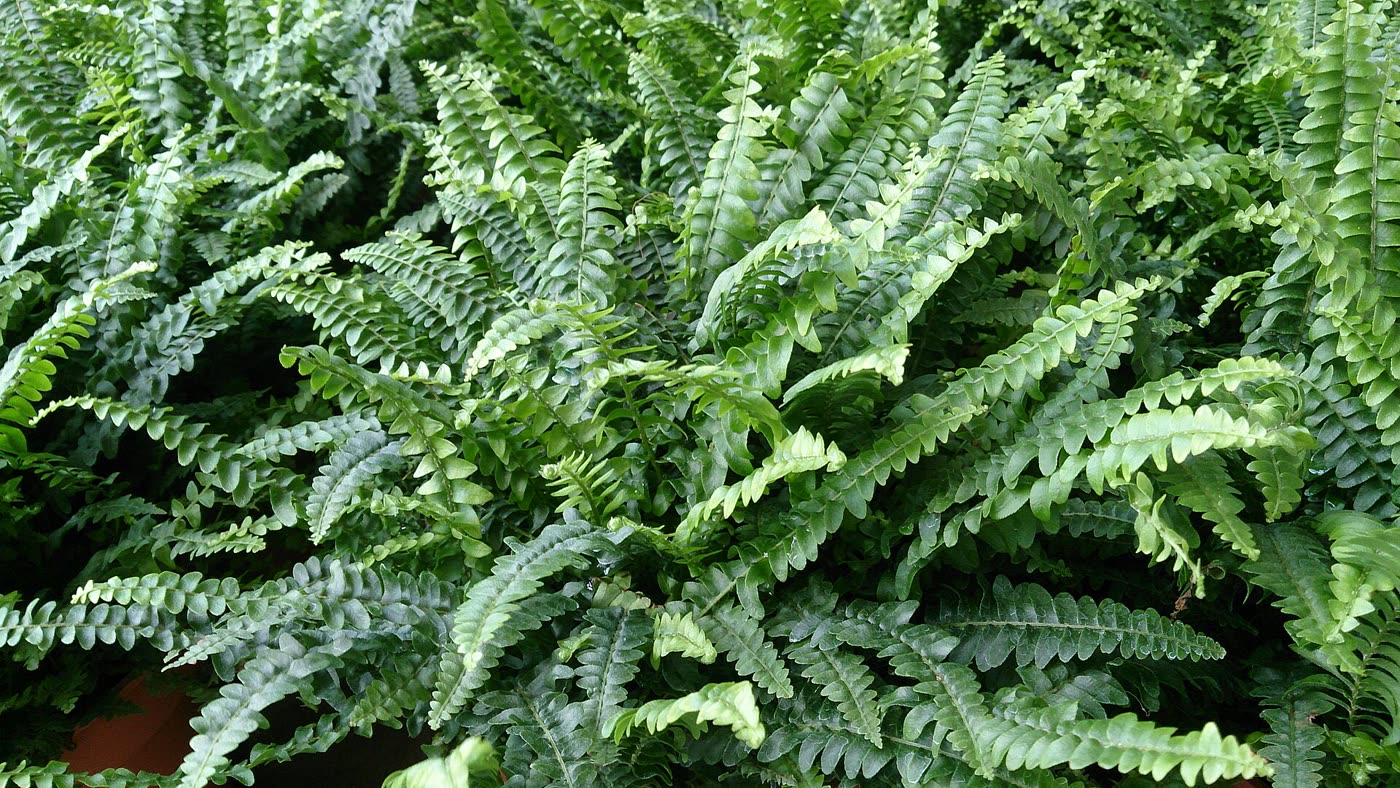
Nephrolepis exaltata 'Bostoniensis'
Also called sword fern, Boston swordfern
Reviewed by Adnan Azam, M.Sc (Hons) Agri. Forestry · Updated November 24, 2026

- Light
- Medium indirect
- Water
- Consistently moist
- Humidity
- High
- Pets
- Non-toxic
Keep the soil moist, not soggy, in medium light and humid air. Brown, crispy fronds are usually dry roots or dry air. It is non-toxic to cats and dogs. A bathroom helps only if there is light.
Overview
Boston ferns are sold in hanging baskets every spring and turn to straw in apartments by August. The plant wants a cool, bright, moist life. Central heating and a 'water when I remember' habit are the opposite.
It is genuinely pet-safer than most of the trailing plants people hang, so it is worth doing properly if you have animals. The work is consistency, not skill.
Light
Bright to medium indirect light. An east window or a north window that is actually bright. Direct sun burns fronds to tan paper. A dark corner thins the plant until the center is a brown basket of dead stems. If you cannot read in the spot at noon, the fern cannot live there.
Water
The root ball should stay moist and never sit in water. In a hanging basket, that means checking with a finger every few days in summer, because baskets dry from all sides. If the ball has pulled away from the basket and feels like a brick, soak the whole thing in a bucket for 20 minutes, then drain it. Repeated drought kills fronds from the base. A sour, dripping basket kills the roots. Flush salts now and then. Ferns burn at the tips when fertilizer and hard water accumulate.
Soil
A peat- or coir-based mix that holds water, with perlite so it does not become mud. Baskets should have drainage. A plastic liner full of water is not a fern habitat. Repot or refresh the mix in spring when the roots are a solid brick.
Humidity and temperature
High, by houseplant standards. Dry air plus a dry basket is how you get a fern that sheds. A humidifier, a bright bathroom, or a grouping of plants. Misting is a short-term surface wetness and does not keep fronds supple overnight. Do not hang it above a radiator.
16–24°C (60–75°F). Hot, dry rooms brown the fronds.
Feeding
Quarter-strength fertilizer every few weeks in spring and summer. They are sensitive to salt. If tips brown while the soil has stayed moist, flush the pot and pause feeding. Winter: no feed.
Repotting
Spring, when you can divide a massive root ball with a bread knife. Pot divisions a little smaller than you think, in fresh mix, and keep them humid while they sulk. A fern hates a bone-dry repot. Water it in, then keep it moist, not flooded.
Propagation
Division is the practical method. Runners sometimes root where they touch mix. Spores are a hobby project, not a way to replace the basket you dried out. Save a division before the mother looks dead, not after.
Through the year
They often look worst in late winter, when heating has been on for months. Cut out fully brown fronds at the base so the crown can push new ones. Do not cut fronds that are only tipped in brown if the rest is green. Move the basket off the heat vent. Growth returns with longer days if the crown is still green.
Pets and toxicity
Boston fern is non-toxic to cats and dogs. That makes the hanging basket a reasonable choice in a pet house. Cats may still bat the fronds and dump the basket. Hang it from a bracket that can take the weight of a freshly watered plant, which is heavier than it looks.
Problems on this plant
- brown leaf tips
Crispy pinnae usually mean the root ball dried or the air did. Check both.
- spider mites
A dusty, stippled fern in a dry room may have mites. Shower it and raise humidity.
- overwatering vs underwatering
Moist is the target. Soggy and crispy are the two failures, and they can happen in the same month.
Do this in order
- Keep the ball moist. Check hanging baskets often. Soak a root ball that has gone hydrophobic.
- Raise the humidity. A bright bathroom or a humidifier. A dark bathroom is not a fern home.
- Cut dead fronds. Remove fully brown fronds at the soil so new ones have room.
- Flush salts. If tips brown while the soil stays moist, leach the pot and feed more lightly.
Questions
Why is my Boston fern turning brown?
Most often the root ball dried out, the air is too dry, or salts have built up. Feel the soil first. A light, hard basket needs a long soak. A wet, sour basket needs drainage and less water.
Can a Boston fern live in a bathroom?
Yes if there is a real window or a grow light. Humidity without light grows a yellow fern and then a dead one.
Are Boston ferns safe for cats?
Yes. The ASPCA lists Nephrolepis exaltata 'Bostoniensis' as non-toxic to cats and dogs.
Tools that match this care
Tools that match this kind of plant. A paid link, when one is added, will be marked and will not change the advice above.
A room humidifier
Calathea, ferns, and prayer plants brown at the edge when winter air drops below about 40% humidity.
Why this helpsA pebble tray
A cheap local humidity bump for a fern or calathea that sits near a vent.
Why this helpsA way to get low-mineral water
Spider plants, dracaenas, calatheas, and peace lilies tip-burn on fluoride and salts.
Why this helps
Related plants
Ask the assistant about this plant. The first replies are free.