Arecaceae
Parlor palm care
Chamaedorea elegans
Also called neanthe bella palm, camedor
Reviewed by Adnan Azam, M.Sc (Hons) Agri. Forestry · Updated November 24, 2026
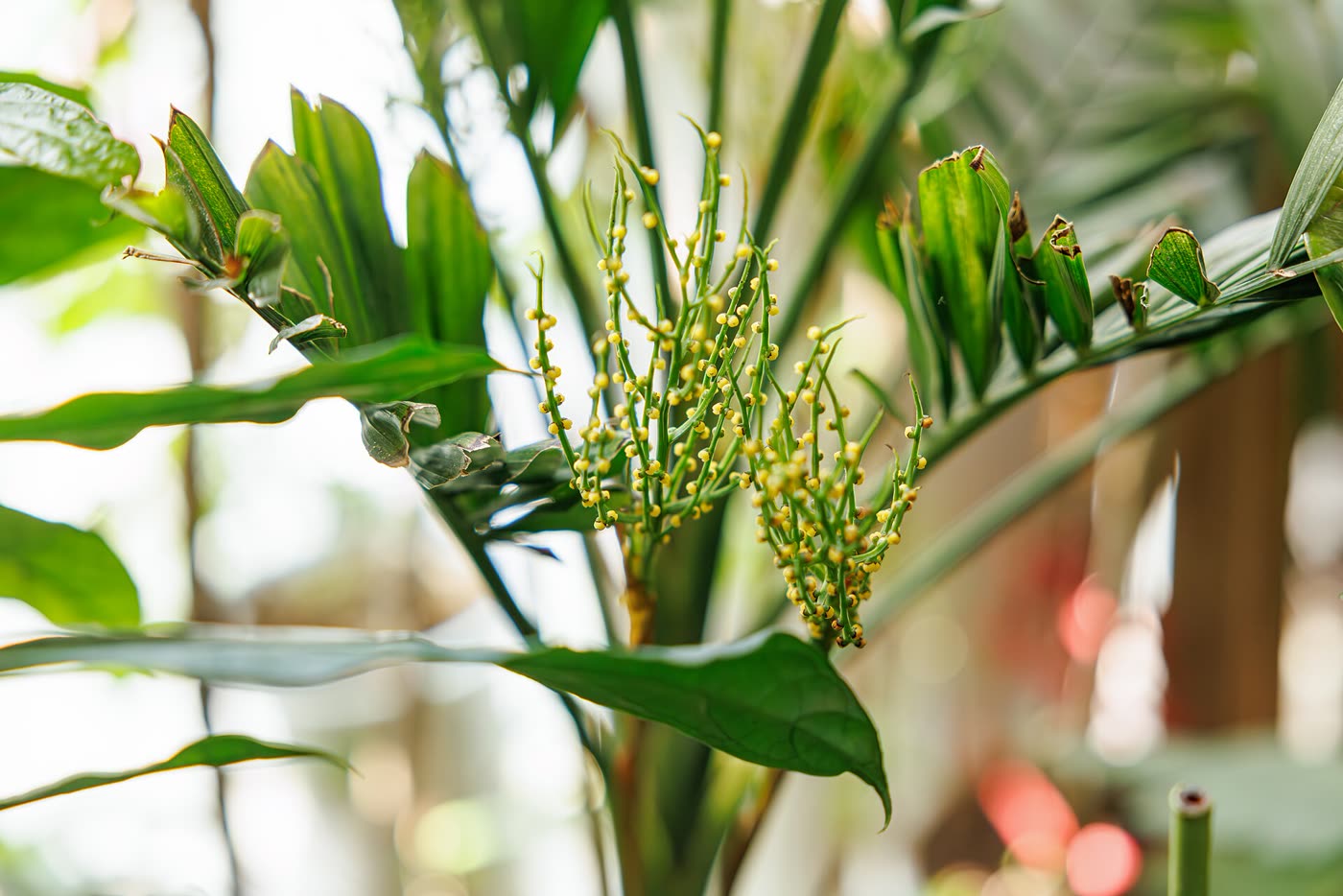

- Light
- Low to medium
- Water
- Lightly moist
- Humidity
- Average to high
- Pets
- Non-toxic
Medium or low indirect light, soil that stays lightly moist, and a watch for spider mites. Brown tips come from dry air, salts, or a pot that fully dried. It is non-toxic to cats and dogs. Do not confuse it with a sago palm, which is dangerously toxic.
Overview
Chamaedorea elegans earned the name parlor palm because it survives the light of a Victorian parlor. It is one of the few palms that does not demand a sunroom. It is also one of the few common 'palms' that is safe around pets.
Sago palm is not a palm and is severely toxic, especially the seeds. If you came here to check a cycad with a fat trunk and stiff fronds, that is not this plant. Parlor palm has thin canes and soft, feathery leaves.
Light
Low to medium indirect light. It will not thrive in a closet, and it will scorch in a hot south window. A few meters from a bright window, or a north window, is the traditional spot. Fronds that stretch and thin out need a step closer to the light. Yellow, sun-bleached fronds need a step back.
Water
Keep the mix lightly moist. Let the surface dry, not the entire root ball. Palms that dry out completely develop brown tips and then whole brown fronds that do not green up. Palms that sit in water get root rot, which looks like the same brown tips, so feel the pot. Use room-temperature water. Flush salts occasionally. They are a bit sensitive to a heavy hand with fertilizer and hard water.
Soil
A peat or coir mix with perlite so it holds moisture and still drains. Do not use garden soil. A pot with a hole, and a saucer you empty. Repot only when roots are tight. Palms dislike root disturbance. When you do repot, keep the root ball intact and go one size up.
Humidity and temperature
Average to high. Dry winter air is the spider-mite season, and parlor palms are a favorite. Brown tips increase when a vent blows on the fronds. A humidifier helps more than misting. Shower the plant if you see fine webbing. Cut fully brown fronds at the base. A half-brown frond can stay until you cannot stand it.
18–27°C (65–80°F). Cold drafts brown the fronds.
Feeding
Half-strength balanced fertilizer monthly in spring and summer. Palms show nutrient issues as yellowing, and they also show salt burn as brown tips. When in doubt, flush and feed less, not more. No feed in winter.
Repotting
Infrequent. Every two or three years, in spring, if at all. They grow slowly. A root-bound parlor palm is often fine. Disturbing the roots of a palm that is already brown-tipping makes it worse. Change the care before you change the pot.
Propagation
Not practical at home. The clump can sometimes be divided, and the divisions sulk. Buying a second plant is the honest method. Seed is slow. This is not a cutting plant.
Through the year
Winter: less water, more attention to mites and dry air. Do not repot in December. Growth is slow year-round and slower in short days. A single new frond is a success. Old fronds dying off one at a time, while new ones emerge, is normal. Several dying at once is not.
Pets and toxicity
Parlor palm is non-toxic to cats and dogs. That is a real advantage. Say the full name when you buy one. 'Palm' on a label is not a safety claim. Sago palm, Cardboard palm, and several others are a different and dangerous category.
Problems on this plant
- spider mites
Dusty fronds and webbing in a dry room. Shower, isolate, repeat.
- brown leaf tips
Dry air, salts, or a root ball that dried out. The brown does not heal.
- overwatering vs underwatering
Both end in brown fronds. The weight of the pot tells them apart.
Do this in order
- Skip the harsh sun. Medium light is enough. A dim room works better for this palm than for almost any other.
- Stay lightly moist. Surface dry is fine. A brick-dry root ball is how tips brown.
- Hunt mites in winter. Look where the leaflets meet. Shower the plant if you see stippling.
- Confirm it is not a sago. Soft feathery leaves and thin canes: parlor palm. Fat trunk and stiff fronds: stop and identify it before pets are near it.
Questions
Why are parlor palm tips brown?
Dry air, fertilizer salts, hard water, or letting the root ball dry completely. Water more evenly, flush the pot, and raise humidity. Snip the brown tips if you want, following the leaflet shape.
Is a parlor palm safe for cats?
Yes. Chamaedorea elegans is listed as non-toxic. Do not extend that to every plant sold as a palm.
How fast does a parlor palm grow?
Slowly. A few new fronds a year is normal indoors. If it is not growing at all and old fronds are dying faster than new ones appear, check light, mites, and whether the pot is either dust-dry or sour.
Tools that match this care
Tools that match this kind of plant. A paid link, when one is added, will be marked and will not change the advice above.
A room humidifier
Calathea, ferns, and prayer plants brown at the edge when winter air drops below about 40% humidity.
Why this helpsA simple moisture meter
Useful while you are still learning the weight of a pot. Do not leave it stuck in the soil.
Why this helpsInsecticidal soap
A contact spray for aphids, mites, and mealybugs. It only works where the liquid touches the insect.
Why this helps
Related plants
Ask the assistant about this plant. The first replies are free.