Asparagaceae
Cast iron plant care
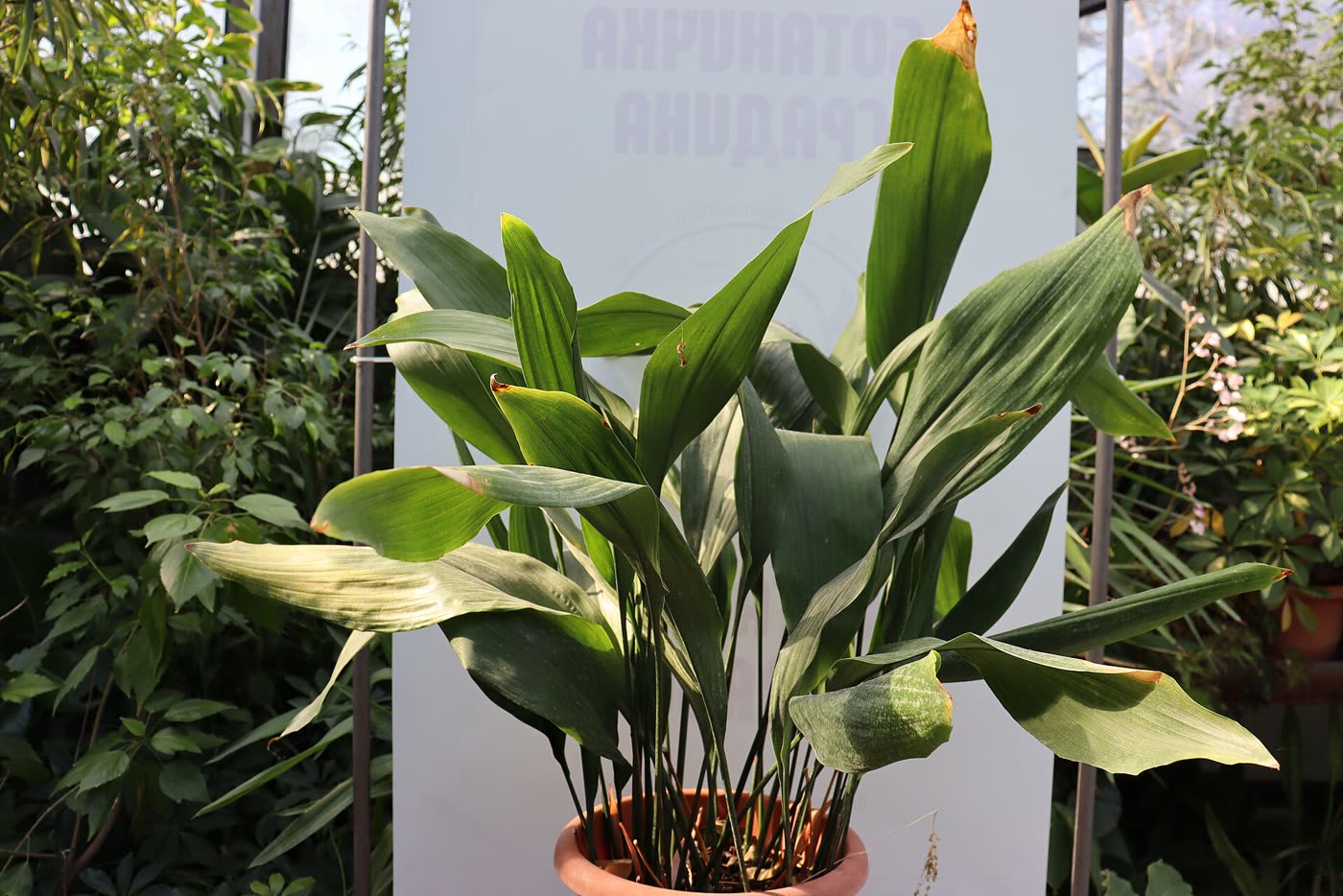
Aspidistra elatior
Also called bar room plant, iron plant
Reviewed by Adnan Azam, M.Sc (Hons) Agri. Forestry · Updated November 24, 2026

- Light
- Low to medium
- Water
- Top half dry
- Humidity
- Average
- Pets
- Non-toxic
Low to medium light and water when the top half of the mix is dry. It tolerates neglect better than soggy soil. Direct sun burns the leaves. It is non-toxic to cats and dogs and grows slowly on purpose.
Overview
Aspidistra elatior got its common name by surviving dark parlors, coal dust, and irregular watering. It still dies in a pot with no drainage. 'Cast iron' means it tolerates low light and missed waterings. It does not mean you can water it every day in a cachepot.
Growth is slow. A few new leaves a year is success. People throw them out for being boring, which is not a horticultural problem. Variegated forms need a bit more light or the stripes fade.
Light
Low to medium indirect light. A north window, or well back from a brighter one. Direct sun bleaches and burns the leaf in patches that look like a disease. Deep shade is acceptable. No light at all is not. If you cannot see the plant without a lamp at noon, it is too dark.
Water
Let the top half of the mix dry. Then water and drain. In low light this can be every two or three weeks, and in winter longer. Wet soil is the reliable way to kill it: yellow leaves, then a rotten crown. Dry tips from waiting too long are uglier and less fatal. When you are unsure, wait.
Soil
Ordinary houseplant mix with some perlite. Nothing special, as long as it drains. Do not overpot. A cast iron plant in a tub of wet soil is no longer cast iron. A snug pot is correct for a slow plant.
Humidity and temperature
Average. It does not need a humidifier. Brown tips are more often salts, a dry pot, or sun than humidity. Very hot, dry air is fine compared with what it does to a fern. Dust the leaves so whatever light you have gets used.
10–24°C (50–75°F). It tolerates cool rooms.
Feeding
Once or twice in summer, half strength. This is not a hungry plant. Extra fertilizer in a dark room salts the soil and burns tips. If it is growing, a light feed is plenty. If it is not growing, light and watering are the levers, not food.
Repotting
Every few years at most, in spring. They dislike a lot of root fuss and do not need a bigger pot on a schedule. Divide a crowded clump with a knife if you want a second plant, keeping several leaves and roots on each piece. Pot divisions snug and keep them a little drier for a week.
Propagation
Division only, in any practical sense. A single leaf may root and sit. A division with a piece of rhizome and a leaf or two is the plant. Do this in spring. It will look unbothered, which is the correct reaction.
Through the year
It can stay in a cool room over winter, down toward 10°C (50°F), if you keep it much drier. That was the original use. In a heated flat, just water less when days are short. Do not put it outside into sudden sun in May. Acclimate, or the leaves burn and you will think a fungus arrived with the weather.
Pets and toxicity
Cast iron plant is non-toxic to cats and dogs. Combined with real low-light tolerance, that makes it one of the more sensible plants for a dim apartment with animals. It will not survive being used as a salad. Non-toxic is not invincible.
Problems on this plant
- yellow leaves
Yellow, soft leaves and wet soil are overwatering. This plant rarely yellows from hunger.
- sunburn
Bleached patches after a move into direct sun. The scar stays. Move it back.
- brown leaf tips
Often salts or a pot that went bone dry. Less often a disease.
Do this in order
- Park it out of the sun. Low or medium light. Sunburn is the surprise injury on a 'tough' plant.
- Err on the dry side. Top half dry, then water. A wet crown is the actual threat.
- Expect slow. A couple of new leaves a year is normal. Do not repot out of boredom.
- Dust the leaves. In low light, dust matters. Wipe, do not shine.
Questions
Can a cast iron plant live in a room with no windows?
Not for long. It tolerates low light, not none. A north window or a bright hallway with borrowed light is the edge. A grow light on a timer is the fix for a windowless room.
Why is my cast iron plant turning yellow?
Almost always too much water, sometimes combined with a pot that is far too large. Let it dry, and if the base is soft, take it out and cut away rot.
Are cast iron plants safe for cats?
Yes. Aspidistra elatior is listed as non-toxic to cats and dogs.
Tools that match this care
Tools that match this kind of plant. A paid link, when one is added, will be marked and will not change the advice above.
A simple moisture meter
Useful while you are still learning the weight of a pot. Do not leave it stuck in the soil.
Why this helpsA full-spectrum grow light
For apartments with one gloomy window, or for keeping variegation from fading.
Why this helpsA terracotta pot with a hole
Clay breathes, which is the difference between a living succulent and a wet one.
Why this helps
Related plants
Ask the assistant about this plant. The first replies are free.