Cactaceae
Christmas cactus care
Schlumbergera
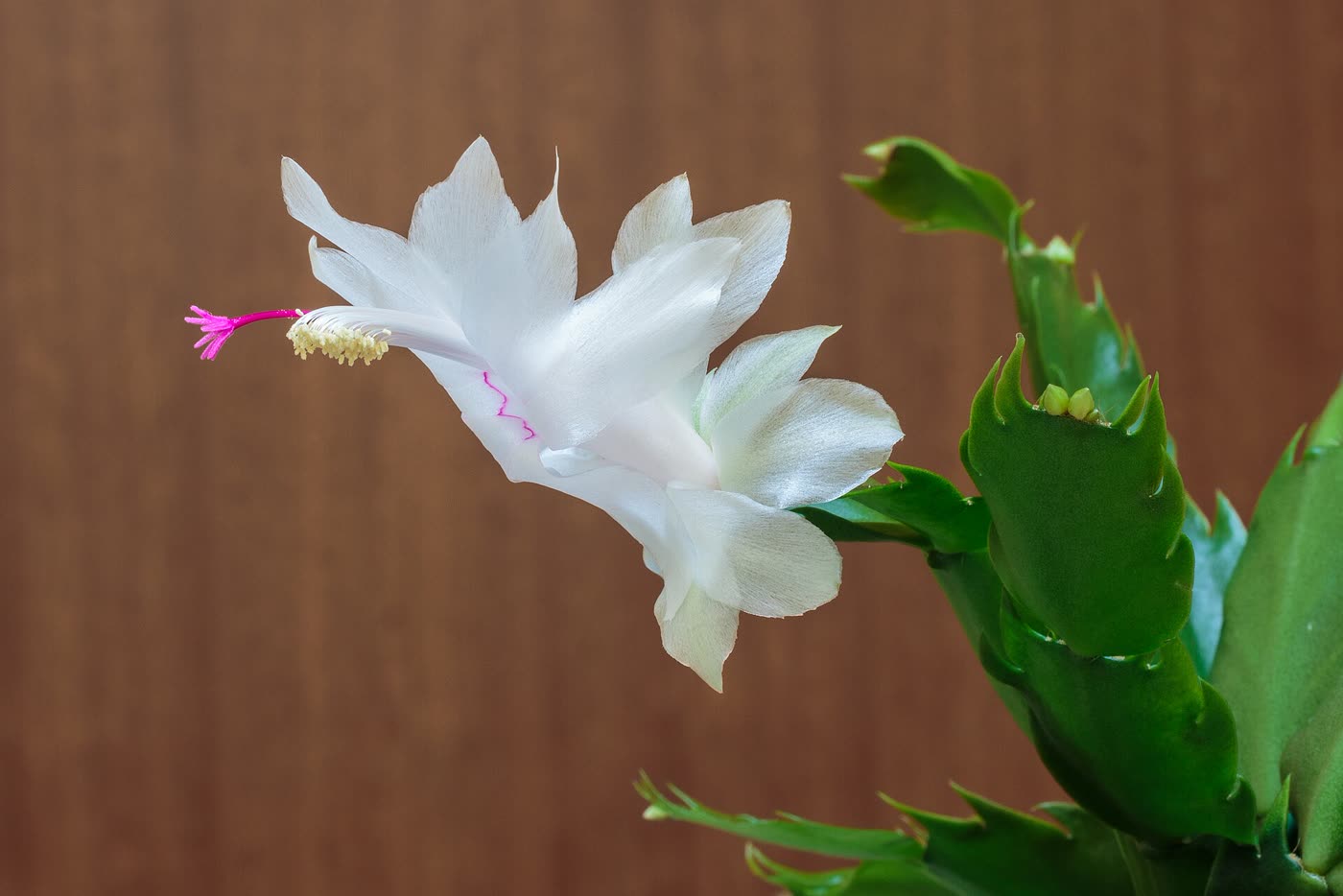
Also called holiday cactus, Thanksgiving cactus, Schlumbergera truncata, zygocactus
Reviewed by Adnan Azam, M.Sc (Hons) Agri. Forestry · Updated November 24, 2026

- Light
- Bright indirect
- Water
- Top inch dry
- Humidity
- Average
- Pets
- Non-toxic
Bright indirect light and water when the top inch is dry. It is not a desert cactus. To bloom, give it long, dark nights and cooler temperatures in autumn, then do not move it once buds form. Non-toxic to pets.
Overview
Holiday cacti are Schlumbergera, epiphytes from Brazilian forests. They live in trees, in bright shade, with regular rain. Treating one like a barrel cactus — full sun and no water for a month — shrivels the segments. Treating one like a fern in a dark pot rots them.
The plant you were given at Thanksgiving is often Schlumbergera truncata, with pointed segment teeth. The true Christmas cactus, S. × buckleyi, has more rounded teeth and blooms later. Care is the same. The calendar on the label is not.
Light
Bright indirect light all year. An east window, or a north window that is genuinely bright. A little morning sun is fine. Hot afternoon sun turns segments red or purple and then yellow. That color can be stress, not health. In autumn, the plant also needs long nights — 13 hours of uninterrupted darkness — to set buds. A lamp in the room at night is enough to stop flowering.
Water
Water when the top inch is dry, then drain the pot. Segments wrinkle slightly when it is thirsty. Deep, constant wrinkling is a dry pot or, if the soil is wet, dead roots. In autumn, while buds are forming, do not let it dry to a crisp and do not suddenly soak a neglected plant. Buds drop when the root ball swings from dust to flood, and also when you move the plant to a new room.
Soil
A regular houseplant mix with extra perlite, or a cactus mix cut with a little peat or coir so it is not pure gravel. They are jungle plants. Pure sand and a month of drought is the wrong model. Drainage still matters. A decorative pot full of water will rot the base segments.
Humidity and temperature
Average home humidity is fine. Very dry air plus a hot window contributes to bud drop. You do not need a misting schedule. Keep it away from a radiator once the buds are on.
15–24°C (60–75°F). Cool nights and long nights set buds.
Feeding
Half-strength balanced fertilizer every few weeks from spring through late summer. Stop in early autumn so the plant can set buds instead of pushing soft growth. A tomato feed is unnecessary. Light and night length do the flowering.
Repotting
They bloom better a little tight. Repot in spring, after flowering, only when the pot is packed, and only one size up. A freshly repotted plant in autumn is a good way to drop every bud. Do not repot a plant that is about to flower.
Propagation
Twist off two or three segments, let the end dry a day, and set it just deep enough to stand in lightly moist mix. Several cuttings in one pot make a full plant. They root in a few weeks in bright light. A single segment works. A crushed one rots.
Through the year
Spring and summer: grow it, water when the top inch is dry, feed lightly. Early autumn: cooler nights if you can (around 13–16°C / 55–60°F) and long darkness. Once buds show, leave the plant where it is. Moving it, a cold draft, or a dried-out pot drops the buds. After flowering, a short rest with slightly less water, then resume. The US and UK are both far enough north for natural short days to work if you do not interrupt them with indoor lighting.
Pets and toxicity
Christmas cactus is non-toxic to cats and dogs. It is one of the better flowering gifts in a pet house. Segments still should not be a toy. A knocked-off piece is a cutting, not an emergency.
Problems on this plant
- leaf drop
Segments and buds drop after a move, a draft, or a wild swing in watering.
- overwatering vs underwatering
Slightly limp segments and dry soil: water. Mushy base segments: rot.
- sunburn
Red-purple stress can be bright light. White, scarred patches are actual burn.
Do this in order
- Water like a tropical. When the top inch is dry, not when a desert calendar says so.
- Give it long autumn nights. Uninterrupted darkness and cooler nights set buds. A street lamp in the window can be enough light to block them.
- Do not move a budding plant. Bud drop is usually a change, not a disease.
- Root a segment. Twist off a short piece in spring and pot it. You do not need a special hormone.
Questions
Why is my Christmas cactus dropping buds?
A move, a draft, lights on at night after buds formed, or the pot swinging from bone dry to soaked. Put it in bright indirect light, keep the moisture even, and leave it alone until it flowers.
How do I make a holiday cactus bloom?
From early autumn, give it 13 hours of real darkness each night and cooler temperatures, and do not fertilize. After buds set, keep the routine steady. Six to eight weeks of long nights is the usual window.
Is a Christmas cactus pet safe?
Yes. Schlumbergera is non-toxic to cats and dogs.
Tools that match this care
Tools that match this kind of plant. A paid link, when one is added, will be marked and will not change the advice above.
A simple moisture meter
Useful while you are still learning the weight of a pot. Do not leave it stuck in the soil.
Why this helpsA full-spectrum grow light
For apartments with one gloomy window, or for keeping variegation from fading.
Why this helpsGritty succulent mix
At least half pumice, perlite, or fine gravel. This is what keeps jade, aloe, and echeveria alive indoors.
Why this helps
Related plants
Ask the assistant about this plant. The first replies are free.