Araceae
Heartleaf philodendron care
Philodendron hederaceum
Also called heartleaf, sweetheart plant, Philodendron scandens
Reviewed by Adnan Azam, M.Sc (Hons) Agri. Forestry · Updated November 24, 2026

- Light
- Low to bright indirect
- Water
- Top half dry
- Humidity
- Average
- Pets
- Toxic
Medium to bright indirect light and water when the top half of the mix is dry. It is toxic to pets. A thin vine needs a cut, not a bigger pot. Velvet cultivars such as micans want more humidity than the plain green form.
Overview
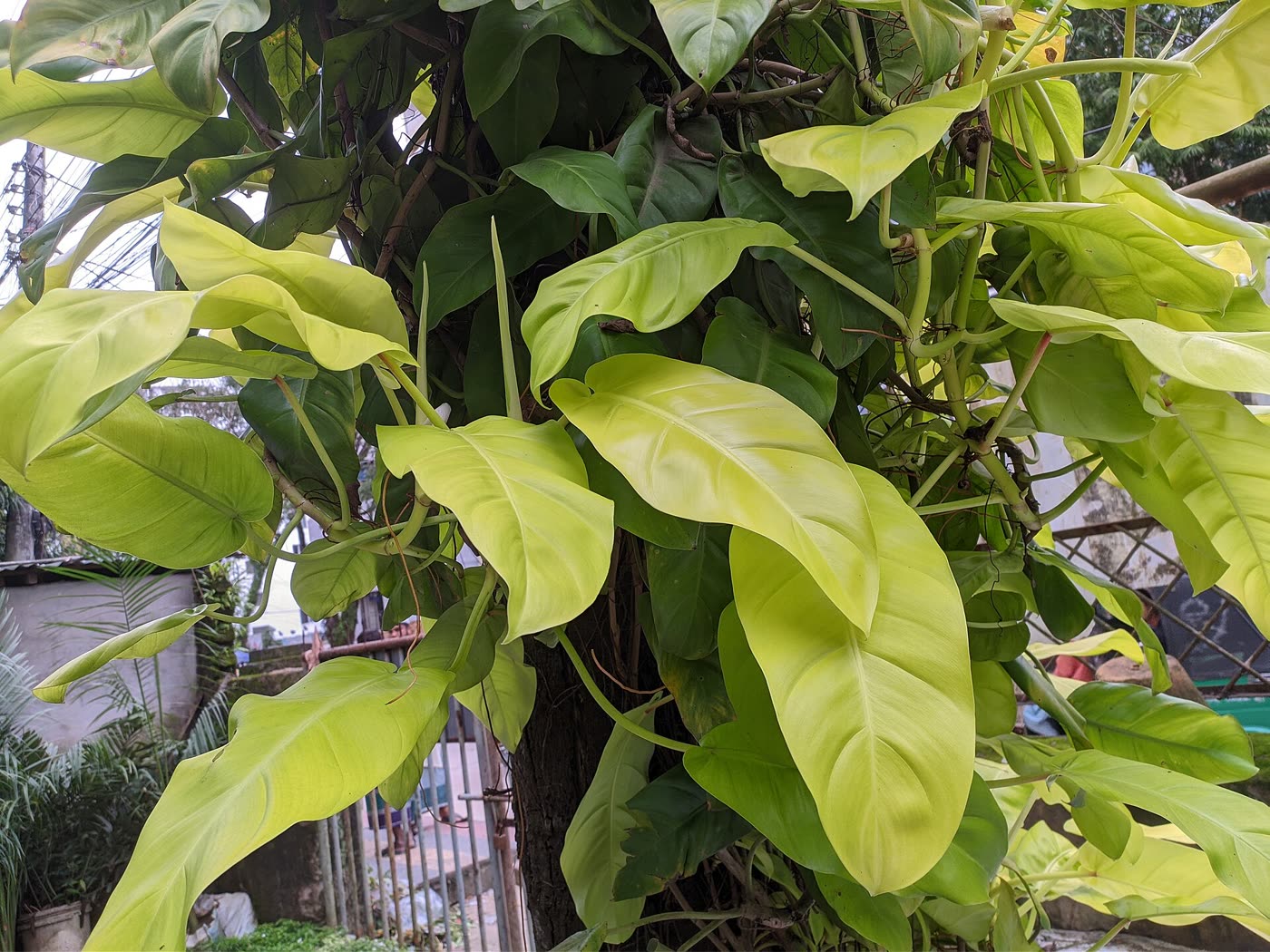
Philodendron hederaceum is the heartleaf. The leaf is more heart-shaped and matte than a pothos leaf, which is thicker and often waxier. Care is similar. The philodendron is a little quicker to wilt and a little happier in moderate light.
'Micans' and other velvet forms are the same species complex in shops and need brighter indirect light plus more humidity or the new leaves come in small. They are still not calathea-level fussy.
Light
Medium to bright indirect light. It survives lower light than a variegated pothos and stretches all the same. Direct afternoon sun fades the velvet on micans and can scorch a thin leaf. An east window or a shelf under a grow light keeps the internodes short.
Water
Let the top half of the mix dry. Leaves that curl slightly are asking for water. Soak and drain. A constantly wet pot yellows older leaves. Micans in a small hanging pot dries faster than a big green plant on the floor, so check them separately.
Soil
Houseplant mix with perlite. Chunkier bark mixes also work and are a good idea if you overwater. Do not overpot a cutting into a large container of wet compost.
Humidity and temperature
Plain green heartleaf tolerates average rooms. Velvet leaves brown at the edge when a heater blows on them. Group those with other plants or run a humidifier. The green form does not need the ritual.
18–28°C (65–82°F).
Feeding
Half-strength monthly in spring and summer. Long bare stems are a light and pruning issue. Fertilizer will not fill a vine that has already stretched.
Repotting
When roots pack the pot, in spring, one size up. Often the better move is to chop the vine and pot the cuttings back in. A huge pot of old vine looks sparse at the top no matter how you feed it.
Propagation
Node cuttings in water or mix. Strip the leaf nearest the node if it would sit under water and rot. Several cuttings per pot make a full plant. A leaf without a node is a leaf, not a start.
Through the year
Growth continues slowly in winter if the room is warm and bright. Water less when the mix stays wet. Cold windows can blacken leaves. Micans is more dramatic about a chill than the plain species.
Pets and toxicity
Heartleaf philodendron is toxic to cats and dogs. The trailing habit puts leaves at paw height. Hang it, or accept that a chewing pet will get a painful mouth and you will get a bald vine.
Problems on this plant
- yellow leaves
A few old yellow leaves are normal. Many at once, with wet soil, means the pot is too wet.
- leggy plants
Cut long vines back to a node and give the plant more light.
- brown leaf tips
More common on velvet forms near heat than on the plain green plant.
Do this in order
- Tell it from pothos. Hearts are thinner and more matte. Care is similar, so a mix-up is not fatal.
- Dry the top half. Water when that layer is dry and the leaves soften slightly.
- Prune to keep it full. Cut bare vines and root the tips back into the pot.
- Hang velvet forms in bright air. Micans wants more light and humidity than the supermarket green form.
Questions
What is the difference between pothos and heartleaf philodendron?
Pothos leaves are thicker, waxier, and often splashed gold. Heartleaf philodendron leaves are thinner and more heart-shaped, and the cataphyll — a small sheath — is more obvious on new philodendron leaves. Both are toxic aroids and both want to dry partway.
Why is my philodendron leggy?
Light. The gaps between leaves get longer as the vine runs from the window. Cut it back and move it closer, or add a grow light.
Can it climb?
Yes. Tied to a pole or a rough surface, leaves often size up. Left to trail, they stay small. Both are fine. Climbing is how you get the bigger leaf if that is what you want.
Tools that match this care
Tools that match this kind of plant. A paid link, when one is added, will be marked and will not change the advice above.
Chunky aroid mix
Bark, perlite, and a bit of peat or coir so monstera and philodendron roots get air.
Why this helpsA moss or coir pole
Monstera and climbing philodendron make larger leaves when the stem can root into a support.
Why this helpsA simple moisture meter
Useful while you are still learning the weight of a pot. Do not leave it stuck in the soil.
Why this helps
Related plants
Ask the assistant about this plant. The first replies are free.