Araceae
Monstera deliciosa care
Monstera deliciosa
Also called Swiss cheese plant, split-leaf philodendron
Reviewed by Adnan Azam, M.Sc (Hons) Agri. Forestry · Updated November 24, 2026

- Light
- Bright indirect
- Water
- Top third dry
- Humidity
- Average to high
- Pets
- Toxic
Give it bright indirect light, water when the top 5 cm of mix is dry, and use a chunky aroid soil. Yellow lower leaves usually mean the pot stayed wet too long. Fenestrations need light and a mature, supported stem.
Overview
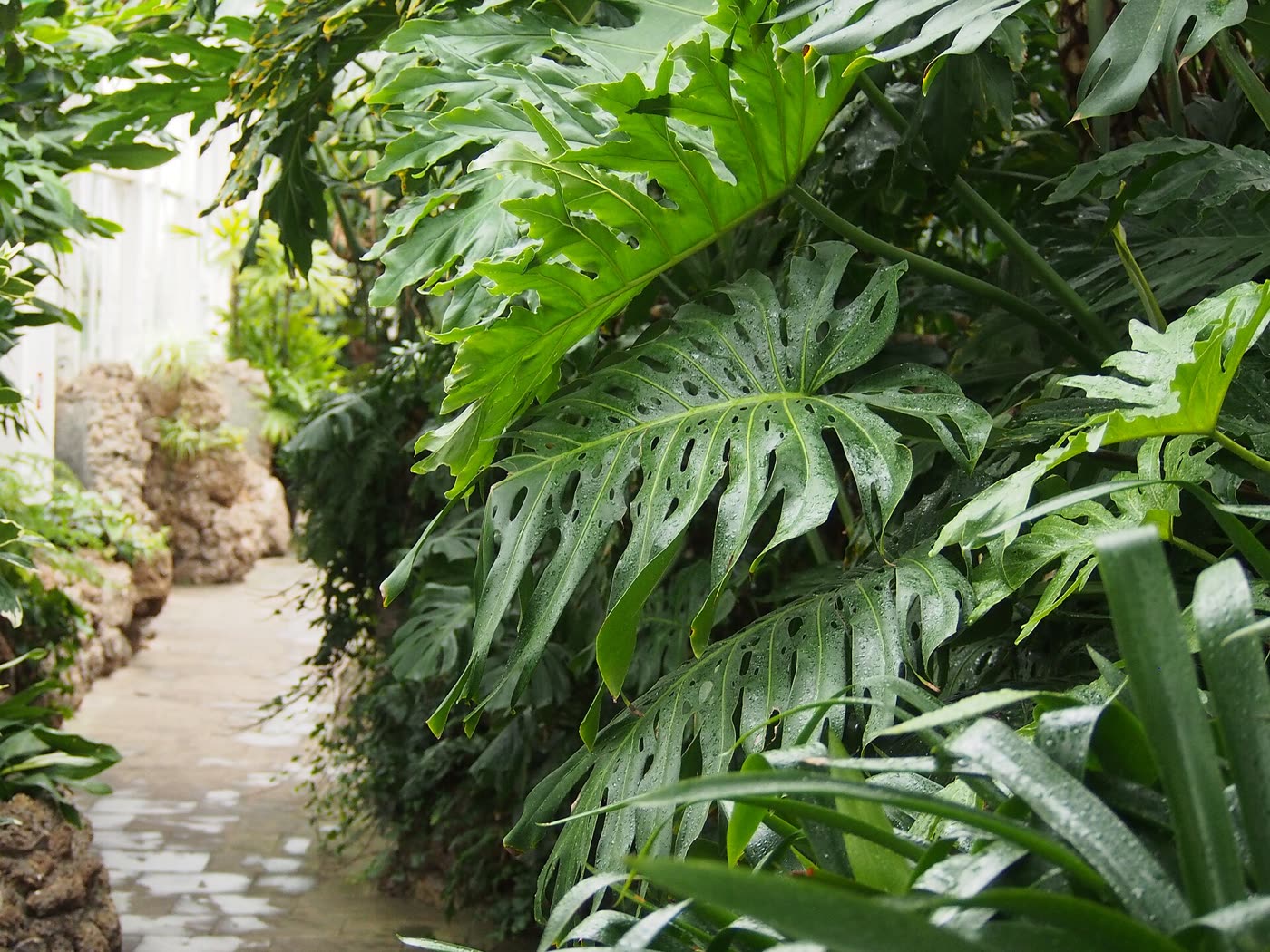
Monstera deliciosa is the plant people mean by Swiss cheese plant. Indoors it is a climber, not a bush. Leaves stay small and solid if the stem sprawls in a dim corner. They split and hole once the plant is bright enough and the stem can root onto a pole.
It is forgiving about a missed watering and unforgiving about a pot that never dries. Most indoor failures are wet mix in a decorative pot with no drainage, not a lack of fertilizer.
Light
Bright, indirect light is the working range: a few feet from an east or south window, or behind a sheer curtain. A north window in a UK winter is often too dim, and the plant responds with long petioles and leaves that never split. Direct midday sun through glass scorches the flat of the leaf. An hour of soft morning sun is fine.
Water
Water when the top third of the mix is dry. In a bright US or UK summer that is often about once a week in a plastic pot; in winter it can stretch to two or three weeks. Soak until water runs out the hole, empty the saucer, and do not water again because the surface looks pale. The surface dries first. The middle is what rots.
Soil
Use a chunky mix: orchid bark, perlite, and a peat or coir base, roughly equal parts if you blend it yourself. A dense houseplant compost stays wet around the thick roots. The pot must drain. A cachepot is fine if you lift the grower pot out to water it.
Humidity and temperature
Average home humidity is enough. Brown edges in winter are more often dry air plus salts than a disease. A humidifier helps if the leaf edges crisp while the roots are healthy. Misting the leaves does not replace that.
18–29°C (65–85°F). Keep it above 15°C (59°F).
Feeding
Half-strength balanced fertilizer every two to four weeks in spring and summer, while it is making leaves. Stop through the darkest months. A pale plant in wet soil does not need food. It needs air at the roots.
Repotting
Repot in spring when roots circle hard or water runs straight through. Go up one pot size, not from a 15 cm pot into a 30 cm tub. Set a moss or coir pole at the same time and tie the stem, not the leaf stalks. Aerial roots can be tucked toward the pole. Cutting them off is optional and does not hurt a healthy plant.
Propagation
Cut below a node that has an aerial root, if you can. A node without a root still works; a leaf without a node never will. Root it in water, damp moss, or perlite. Pot it up once the new roots are several centimeters long and branch, not the day the first nub appears.
Through the year
Growth slows when days shorten. Water less, feed nothing, and do not panic over one yellow leaf in November. In the northern hemisphere, the useful growing window is roughly March through September. A grow light is what keeps winter from undoing a variegated plant.
Pets and toxicity
Monstera is toxic to cats and dogs. Chewing it causes immediate mouth pain, drooling, and vomiting because of insoluble calcium oxalates. The fruit of a mature outdoor plant is a separate story and is not something an indoor plant will ripen in a living room. Keep it off the floor if you have a chewing puppy.
Problems on this plant
- yellow leaves
Several older leaves turning yellow while the pot stays heavy is overwatering, not old age.
- root rot
Black, smearing roots and a sour smell mean you need to cut, not just wait.
- leggy plants
Long gaps between leaves and no splits are a light problem.
- brown leaf tips
Crisp edges with firm roots usually track dry air or fertilizer salts.
Do this in order
- Set the light. Place it in bright indirect light, close enough to a window that a newspaper is easy to read at noon.
- Check before you water. Water only when the top third of the mix is dry and the pot feels lighter.
- Give the stem a job. Add a pole and tie the main stem so new leaves can size up.
- Read yellow leaves. One old yellow leaf is normal. Several, with wet soil, means the roots need air.
Questions
Why is my monstera not splitting?
Young leaves on a juvenile stem are solid. Splits come with brighter light and a climbing stem. A plant in a dark hallway will stay juvenile no matter how old the pot is.
Should I mist my monstera?
No. Wet leaves in a still room invite spots. If the air is dry, raise the humidity of the room or ignore it. Monstera tolerates ordinary indoor air.
Can a monstera live in water?
A cutting can root in water. A whole plant left in a vase indefinitely needs nutrients and still tends to stall. Pot it in a chunky mix once the roots branch.
Tools that match this care
Tools that match this kind of plant. A paid link, when one is added, will be marked and will not change the advice above.
Chunky aroid mix
Bark, perlite, and a bit of peat or coir so monstera and philodendron roots get air.
Why this helpsA moss or coir pole
Monstera and climbing philodendron make larger leaves when the stem can root into a support.
Why this helpsA simple moisture meter
Useful while you are still learning the weight of a pot. Do not leave it stuck in the soil.
Why this helps
Related plants
Ask the assistant about this plant. The first replies are free.